Flashing Repair in Redondo Beach from $450. Near the water this is very often the entire job -- at a fraction of a re-roof. Free inspection and a written quote.
This is very often the entire job in Redondo, and very often quoted as a replacement instead -- because replacing everything is easier to price than diagnosing what failed. Step flashing, valley metal, collars, boots and drip edge all corrode while the covering stays sound.
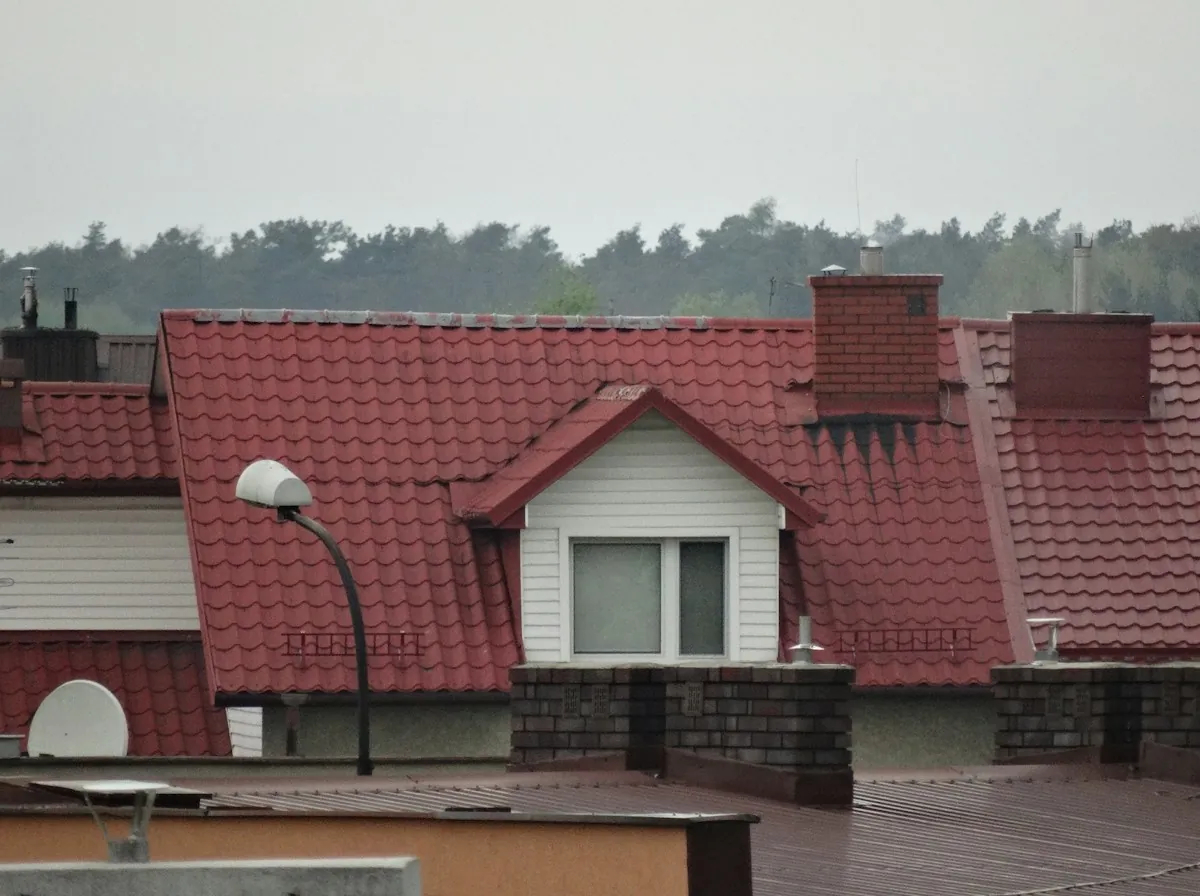
Salt air does not attack asphalt or tile in any hurry. It attacks metal, and a roof is full of it: step flashing at every wall, valley metal, vent collars, pipe boots, drip edge, gutter and every fixing holding those down. Within a few miles of the coast those go first, reliably, while the covering is still sound.


Re-flashing a roof runs roughly $450 for a single detail to about $2,800 for a full set of wall flashings, valley metal, collars and drip edge. Compare that to $11,000 or more for a replacement and you can see why it matters whether anyone has actually diagnosed your roof. Ask for the flashing job to be priced separately before accepting a replacement quote. Near the water a sound field with corroded details is the most common condition, and the two numbers are an order of magnitude apart.
A sound field -- granules present, lying flat, not brittle -- with corroded details. Within a few miles of the water that is the most common condition we find.
Multi-story access, details that can only be reached by lifting tile or a deck, and stainless rather than hot-dipped metal where exposure justifies it.
The metal. Standard galvanized corrodes near the beach; stainless or heavy hot-dipped costs a little more and lasts several times longer. It is invisible afterwards, so it goes in writing.
Full coastal exposure, so the metalwork is the story. Flashings, collars and fixings corrode while the covering stays sound, and the density adds a second problem: multi-story on small lots means access from the street only, with no room to stage material or drop a tear-off.
Including ours. There are enough door-knockers working this coast that the checks are worth making on anybody.
Standard galvanized near the beach corrodes and the covering lifts around it. Stainless or heavy hot-dipped costs a little more and lasts several times longer -- and it is invisible afterwards, so it has to be written down.
Lawndale is climate zone 6. The steep-slope requirement applies in zones 10 to 15, so a reflective covering is not a code obligation on your pitched roof. A low-slope section is a different matter.
If it was worked out at the curb, it is a guess. Salt air does its damage at the fixings and the flashings, none of which shows from the sidewalk, so a quote written without going up was written without the information that decides the job.
Full coastal exposure means the repair is usually metalwork rather than covering.
On dense multi-story housing the leak frequently enters at a wall junction rather than on the roof plane at all -- where a neighboring structure meets yours, or where a deck ties into a wall.
Near the water the shingle rarely fails first -- the nails do.
Coastal low slope fails at the edges.
Street-only access on dense multi-story lots is the hard part of a Redondo emergency, particularly at night.
Ask first whether you need one.
The middle of the gradient. Damp shaded slopes.
Inland pattern, plus a lot of small apartment blocks.
Furthest inland. Sun finishes the covering first.
The whole gradient inside one city, east to west.
Most exposed, and nowhere to put a ladder.
Older stock and newer rebuilds, side by side.
A tight grid beside a very large industrial district.
What is worth knowing before you book this.
On most roofs, yes. Step flashing at a wall, valley metal, vent collars and pipe boots can be renewed by lifting and relaying the courses immediately around them. On tile it is even more straightforward, because the tile comes up and goes back.
With the right metal, longer than the covering will. With standard galvanized within a couple of miles of the beach, expect to be having this conversation again inside a decade -- which is why the specification matters more than the labor.
Stainless or a heavy hot-dipped product, not standard galvanized. The price difference is modest and the lifespan difference is several times over. It is completely invisible once the roof is finished, which is exactly why it should be written into the quote rather than left to whoever is on site.
Closer to its rated life than it does inland, genuinely. Moderate temperatures and far less extreme ultraviolet are easier on the mat than an Inland Empire summer. When a roof here fails early it is usually wind or corroded fixings rather than the shingle wearing out.
No. The inspection is free, the written quote is free, and there is no obligation attached to either. What we will not do is give you a price at the door, or quote a replacement without first telling you whether the covering is actually the thing that failed.
Free inspection, and a written quote against a written scope. The metalwork judged separately from the covering.