Roof repair in Lawndale from $200. We find the failed detail and name it - and near the water we will tell you when the job is the metalwork rather than the roof.
Lawndale sits in an awkward middle of the gradient, and it produces a specific failure. Far enough inland that ultraviolet outpaces salt, but close enough that the marine layer keeps a north-facing slope damp overnight -- so the covering ages conventionally while the shaded runs stay wet longer than they should, and the laps there go first.
Most South Bay roofs that get replaced did not need to be. A slipped course, a split upstand, a perished vent boot or a flashing that has let go are each a repair costing hundreds -- and each is routinely presented as evidence that the whole roof is finished.


Most repairs land between $350 and $1,500, with small ones caught early from around $200. Set that against a replacement at $11,000 to $25,000 and it is worth knowing which one you actually need before anyone starts quoting. Lawndale sits in the middle of the gradient, so the useful question is which elevation. Seaward-facing flashings should be specified better than standard galvanized even here, and the north-facing slopes that stay damp overnight are where the laps go first.
A localized failure on a slope whose field still has granules, lies flat and is not brittle. That is a repair, full stop.
A steep pitch, a multi-story coastal lot with street-only access, or wet decking under the failure.
Is it the covering or the metalwork. Near the water those fail on completely different clocks, and only one of them means you need a new roof.
The neighboring jobs, priced.
The marine-layer leak is the one people miss here.
Even at this distance from the water, flashings outlive the covering less comfortably than people assume.
Composition here genuinely does last closer to its rated life than it would inland -- moderate temperatures and far less extreme ultraviolet.
Lawndale is Title 24 climate zone 6, so your PITCHED roof is outside the steep-slope cool-roof requirement entirely.
One advantage of working a patch this compact: everything is inside about ten miles, so response is limited by daylight rather than by driving.
Before anything else, Lawndale is Title 24 climate zone 6 -- so the steep-slope cool-roof requirement does not apply to your pitched roof.
This is the single most expensive misdiagnosis in the South Bay, and it is made honestly as often as not -- replacing everything is simply easier to price than working out what failed.
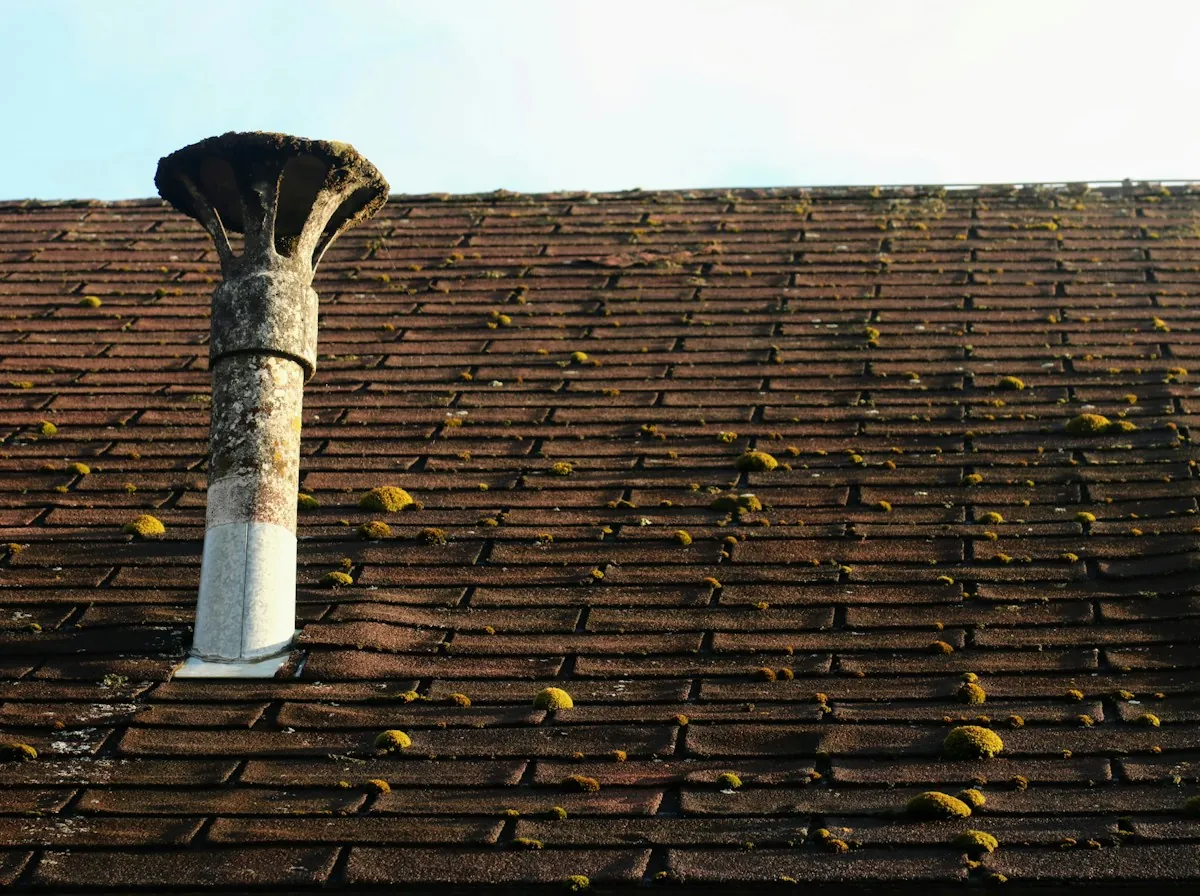
Step flashing, valley metal, vent collars, pipe boots, drip edge, gutters and every fixing holding them down. Within a few miles of the beach those go first, reliably, while the covering is still sound.
Granules present, lying flat, not brittle? Then the covering has life in it and what you have is a flashing job -- $450 to $2,800 rather than $11,000 and up.
In Gardena or eastern Torrance the sun finishes the covering first and the metal outlasts it, so a replacement there is more often genuinely the right call. Same ten miles, opposite answer.
Telling you that is the same piece of work as telling you the opposite, and it deserves the same evidence. Ask to be shown the field, not just the failure.
Free inspection with the fixings and flashings checked, then a written quote.
Tell us the street and what you are seeing. In an area this compact the street alone tells us roughly how far from the water you are, which is half the diagnosis before anyone travels.
Both, together. On a low-pitch roof the water enters at a junction and travels before it drops, so a survey from the roof alone is how the same leak gets fixed twice.
Near the water these fail on completely different clocks. Knowing which one has actually finished is the difference between a flashing job and a re-roof, and it is a large difference.
The failed detail named, and the metal specified for your distance from the sea. The area left clean and the before-and-after set handed over.
Including ours. There are enough door-knockers working this coast that the checks are worth making on anybody.
Roofing is licensed work in California and the classification is C-39. The register is public. If the number is not offered before the ladder goes up, that is itself the answer to the question.
It is the question that decides whether you need a roof or a set of flashings. A quote that treats them as one thing has not diagnosed anything, it has priced everything.
Standard galvanized near the beach corrodes and the covering lifts around it. Stainless or heavy hot-dipped costs a little more and lasts several times longer -- and it is invisible afterwards, so it has to be written down.
Lawndale is climate zone 6. The steep-slope requirement applies in zones 10 to 15, so a reflective covering is not a code obligation on your pitched roof. A low-slope section is a different matter.
If it was worked out at the curb, it is a guess. Salt air does its damage at the fixings and the flashings, none of which shows from the sidewalk, so a quote written without going up was written without the information that decides the job.
Everything this site covers is inside about ten miles, and yet roofs at either end of that distance fail for opposite reasons. Within a few miles of the beach, salt air finishes the METALWORK first: step flashing at every wall, valley metal, vent collars, pipe boots, drip edge, gutters and every fixing holding them down. The covering is often still perfectly sound.
Inland - Lawndale, Gardena, the eastern side of Torrance - that reverses. There is more sun and less salt, so the covering ages out first and the metalwork outlasts it. A contractor who specifies the same fixings across that gradient is wrong at one end of it, and standard galvanized near the beach is the wrong end to be wrong at.
The practical consequence is worth money. A roof leaking at its details with a sound field is a flashing job, not a replacement - and it is very often quoted as a replacement, because replacing everything is easier to price than diagnosing what actually failed. If your field still has granules, lies flat and is not brittle, ask specifically whether flashings alone would do it.

Part of Rancho Sausal Redondo from the 1780s, first subdivided in 1905 by Charles B. Hopper and named after the Chicago neighborhood, built out after the Second World War and incorporated in 1959. Small post-war lots with low-pitch single-story housing, packed tightly into under two square miles.
Far enough inland that ultraviolet outpaces salt, but close enough that the marine layer keeps a shaded slope damp overnight. That combination is specific: the covering ages conventionally while the north-facing runs stay wet longer than they should, so the laps on those slopes go first.
Lawndale is under two square miles, which means a roofer working here crosses several separate city building departments within a few miles of the yard.

Eight South Bay cities inside about ten miles - four on the water, four inland, and eight separate building departments.
Inland pattern, plus a lot of small apartment blocks.
Furthest inland. Sun finishes the covering first.
The whole gradient inside one city, east to west.
Full coastal. It is usually the metalwork.
Most exposed, and nowhere to put a ladder.
Older stock and newer rebuilds, side by side.
A tight grid beside a very large industrial district.
Answers to what actually gets asked on the phone.
It holds as long as the covering around it, provided the repair was the right call. That is the whole point of checking the field rather than just the failure -- a good repair in a finished roof is money spent twice, and we will say so rather than take it.
Usually because replacing everything is easier to price than diagnosing what failed, and near the water the diagnosis is genuinely counter-intuitive: sound covering, corroded metalwork. We will show you the field and the details separately so you can judge it yourself.
Most repairs land between $350 and $1,500, with small ones caught early from around $200. A full replacement is $11,000 to $25,000 in the South Bay, which is why it matters a great deal whether anyone has actually diagnosed your roof before quoting one.
Almost certainly not, and this is the most common misdiagnosis near the coast. Salt air attacks metal, not asphalt or tile -- so flashings, collars, boots, drip edge and fixings corrode while the covering is still sound. That is a $450 to $2,800 job rather than an $11,000 one.
For a pitched roof in Lawndale, no. The steep-slope cool-roof requirement applies in Title 24 climate zones 10 through 15 and this is zone 6. A flat or low-slope section is different: that needs an aged SRI of 75 or better in every zone in California, with no exemption.
Free inspection, a written quote, and an honest answer about whether it is the roof or the metalwork.