Flashing Repair in El Segundo from $450. Near the water this is very often the entire job -- at a fraction of a re-roof. Free inspection and a written quote.
The industrial roofs here have flashing details a house never does: large plant curbs, duct penetrations and expansion joints, all in metal and all in coastal air. Those are where a big low-slope roof lets go, and they are repairable without touching the field.
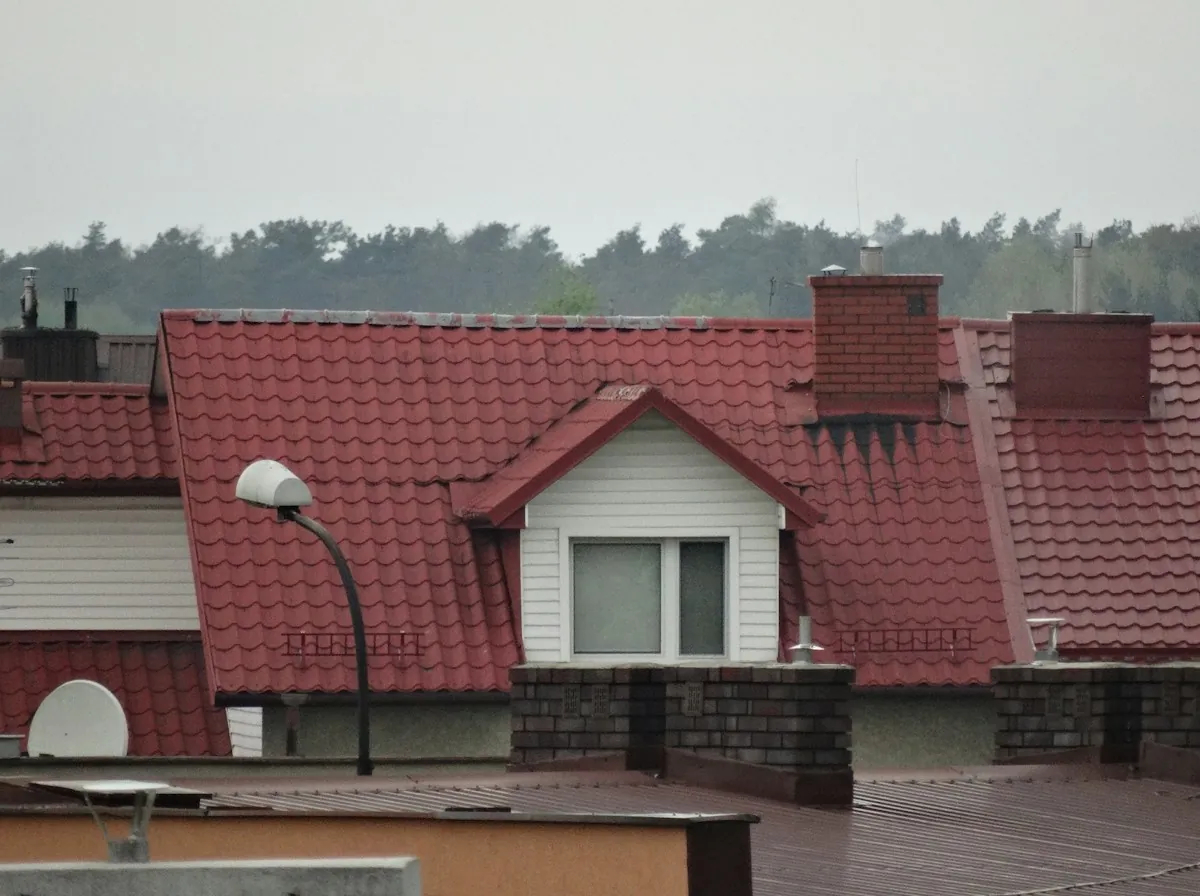
Salt air does not attack asphalt or tile in any hurry. It attacks metal, and a roof is full of it: step flashing at every wall, valley metal, vent collars, pipe boots, drip edge, gutter and every fixing holding those down. Within a few miles of the coast those go first, reliably, while the covering is still sound.


Re-flashing a roof runs roughly $450 for a single detail to about $2,800 for a full set of wall flashings, valley metal, collars and drip edge. Compare that to $11,000 or more for a replacement and you can see why it matters whether anyone has actually diagnosed your roof. Two rate cards under one city name. A house on the residential grid prices like the rest of the South Bay; an industrial low-slope roof prices off its plant, penetrations and access control. A quote should say which it surveyed.
A sound field -- granules present, lying flat, not brittle -- with corroded details. Within a few miles of the water that is the most common condition we find.
Multi-story access, details that can only be reached by lifting tile or a deck, and stainless rather than hot-dipped metal where exposure justifies it.
The metal. Standard galvanized corrodes near the beach; stainless or heavy hot-dipped costs a little more and lasts several times longer. It is invisible afterwards, so it goes in writing.
Two completely different rate cards in one city. The residential grid is small older houses with coastal metalwork problems; the industrial side is large-area low slope with plant, curbs and access controls that price nothing like a house. A quote should say which it has surveyed.
Worth knowing before you start ringing round, and worth factoring into anything with a deadline on it.
Working a patch this compact has one genuine advantage: everywhere covered here is inside about ten miles, so how quickly someone reaches you is limited by daylight rather than by driving across a county. Calling before dusk rather than after it is usually the difference between a make-safe tonight and one tomorrow morning.
Two rate cards in one city.
On the industrial side a leak is usually at a penetration -- and there are a great many of them.
The residential grid here is small older houses where shingle is the norm, and being this close to the water means the fixing question applies in full.
The industrial district has the largest low-slope roofs covered on this site by a wide margin, and they are a different discipline from residential work -- plant curbs, expansion joints, roof traffic and access control.
On the industrial side an emergency usually means protecting what is underneath before anything else -- stock, plant or a production floor.
Two completely different jobs under one city name.
The middle of the gradient. Damp shaded slopes.
Inland pattern, plus a lot of small apartment blocks.
Furthest inland. Sun finishes the covering first.
The whole gradient inside one city, east to west.
Full coastal. It is usually the metalwork.
Most exposed, and nowhere to put a ladder.
Older stock and newer rebuilds, side by side.
What is worth knowing before you book this.
On most roofs, yes. Step flashing at a wall, valley metal, vent collars and pipe boots can be renewed by lifting and relaying the courses immediately around them. On tile it is even more straightforward, because the tile comes up and goes back.
With the right metal, longer than the covering will. With standard galvanized within a couple of miles of the beach, expect to be having this conversation again inside a decade -- which is why the specification matters more than the labor.
No. The inspection is free, the written quote is free, and there is no obligation attached to either. What we will not do is give you a price at the door, or quote a replacement without first telling you whether the covering is actually the thing that failed.
Most repairs land between $350 and $1,500, with small ones caught early from around $200. A full replacement is $11,000 to $25,000 in the South Bay, which is why it matters a great deal whether anyone has actually diagnosed your roof before quoting one.
Because the two enemies swap places. Within a few miles of the beach salt air finishes the metalwork first; inland, in Gardena or eastern Torrance, there is more sun and less salt so the covering ages out first and the metal outlasts it. A contractor using one specification across that gradient is wrong at one end.
Free inspection, and a written quote against a written scope. The metalwork judged separately from the covering.