Flat Roof Repair in Gardena from $2.50. Low slope over additions and carports -- and the one Title 24 rule that applies in every climate zone. Free inspection and a written quote.
The commercial and light-industrial frontage through Gardena means more genuinely large low-slope roofs than anywhere else inland here. Those price off the penetrations and the plant rather than the membrane area, and equipment that has to keep running changes the sequence.
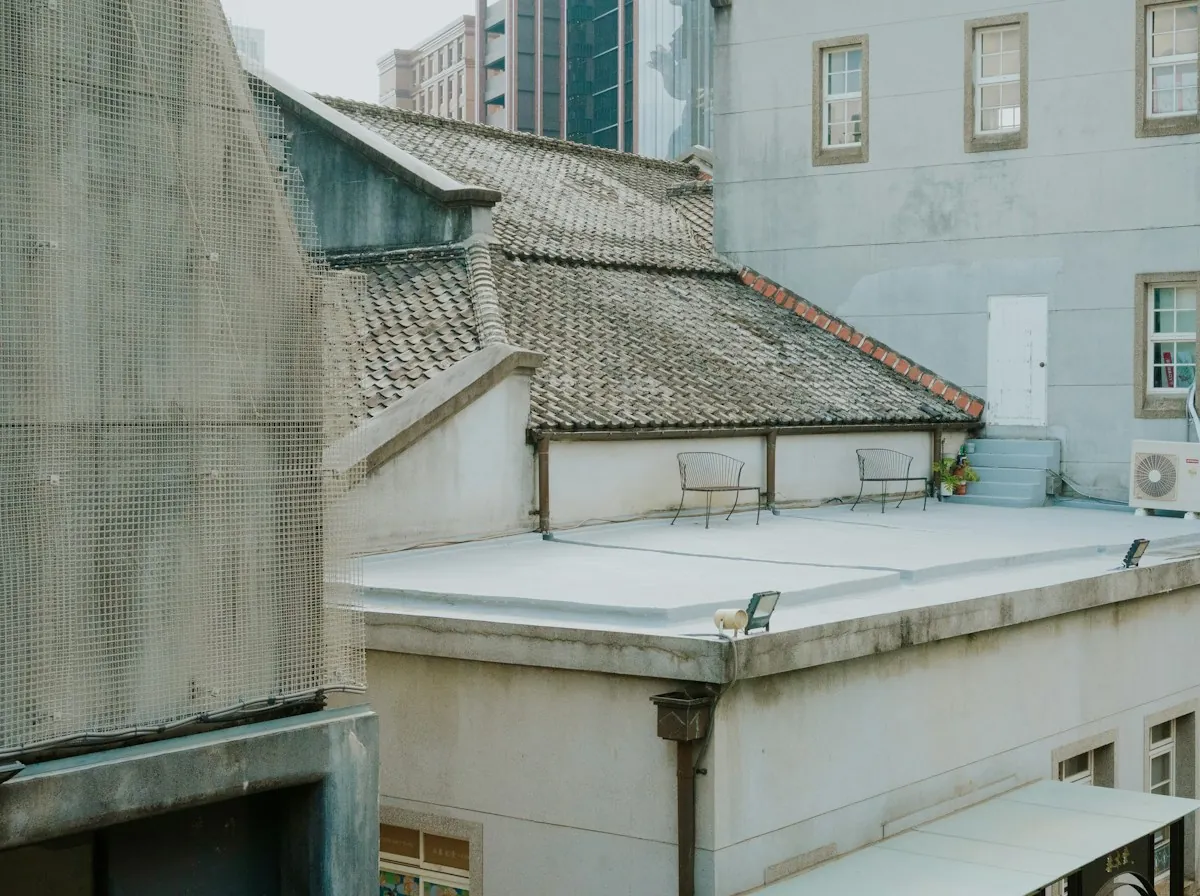
Most low slope here is residential: rear additions, converted garages, carport roofs and patio covers tied into the main house. All of it sheds water slowly, so it depends on the drainage working rather than on gravity doing the job.


If the substrate is sound and dry, a coating at $2.50 to $7.00 per square foot is often the right answer and by some distance the cheapest. Discrete repairs start around $350. What is not optional is the rating: low slope needs aged SRI 75 in every California climate zone. The most conventional pricing covered here, and the one place where standard fixings are genuinely adequate. Furthest inland means the covering ages out properly, so a replacement here is more often the honest answer than it is at the beach.
A sound, dry substrate can be coated. Coating a wet one seals the moisture in and buys about a year, so we establish which you have before quoting either.
Fall that has to be rebuilt, wet insulation, new outlets, and near the water the edge metal and terminations, which is where a coastal membrane actually fails.
Zone 6 means your pitched roof is outside the steep-slope cool-roof requirement. The flat section is not outside the low-slope one, which applies everywhere.
The inland end of the gradient. Less marine influence means more sun on the covering and correspondingly less on the metalwork, so a Gardena roof usually fails the way a valley roof does -- granule loss and brittleness across a slope rather than corroded flashings. Standard fixings are genuinely adequate here in a way they are not four miles west.
Including ours. There are enough door-knockers working this coast that the checks are worth making on anybody.
It is the question that decides whether you need a roof or a set of flashings. A quote that treats them as one thing has not diagnosed anything, it has priced everything.
Lawndale is climate zone 6. The steep-slope requirement applies in zones 10 to 15, so a reflective covering is not a code obligation on your pitched roof. A low-slope section is a different matter.
If it was worked out at the curb, it is a guess. Salt air does its damage at the fixings and the flashings, none of which shows from the sidewalk, so a quote written without going up was written without the information that decides the job.
The inland end of the gradient, and the one place covered here where standard fixings are genuinely adequate.
Further from the water, the entry point is more often in the field than at a detail: a cracked or lifted shingle on a sun-beaten slope rather than a corroded flashing.
This is the one area covered where a flashing job is usually NOT the answer.
The furthest inland and the most sun, so this is where composition ages fastest in the areas covered.
Inland emergencies here are more often a failed covering than a failed detail, which means the make-safe covers an area rather than a point.
The one area covered where a replacement is genuinely the likely answer rather than the expensive one.
The middle of the gradient. Damp shaded slopes.
Inland pattern, plus a lot of small apartment blocks.
The whole gradient inside one city, east to west.
Full coastal. It is usually the metalwork.
Most exposed, and nowhere to put a ladder.
Older stock and newer rebuilds, side by side.
A tight grid beside a very large industrial district.
What is worth knowing before you book this.
Water still sitting 48 hours after rain means the fall is wrong or a drain is not working. Not an emergency this week, but it is what turns a small repair into a deck replacement if it is left for a couple of winters.
Because the two rules are different. The steep-slope requirement applies only in climate zones 10 to 15 and Lawndale is zone 6. The low-slope requirement -- aged SRI 75 -- applies in all sixteen zones with no exemption anywhere.
Because the two enemies swap places. Within a few miles of the beach salt air finishes the metalwork first; inland, in Gardena or eastern Torrance, there is more sun and less salt so the covering ages out first and the metal outlasts it. A contractor using one specification across that gradient is wrong at one end.
For a pitched roof in Lawndale, no. The steep-slope cool-roof requirement applies in Title 24 climate zones 10 through 15 and this is zone 6. A flat or low-slope section is different: that needs an aged SRI of 75 or better in every zone in California, with no exemption.
Closer to its rated life than it does inland, genuinely. Moderate temperatures and far less extreme ultraviolet are easier on the mat than an Inland Empire summer. When a roof here fails early it is usually wind or corroded fixings rather than the shingle wearing out.
Free inspection, and a written quote against a written scope. The metalwork judged separately from the covering.